 English
 русский
Content
- 1 What Baking Paper Sheets Actually Are (and What They're Not)
- 2 Types of Baking Paper Sheets and How They Differ
- 3 Standard Sizes and How to Match Them to Your Trays
- 4 Temperature Limits: What Your Baking Paper Can Actually Handle
- 5 Practical Uses for Pre-Cut Baking Paper Sheets
- 6 How to Get More Than One Use Out of Each Sheet
- 7 Buying Baking Paper Sheets: What to Look for on the Label
What Baking Paper Sheets Actually Are (and What They're Not)
Baking paper sheets — also sold as parchment paper sheets or oven paper sheets — are pre-cut, flat pieces of treated paper designed to line baking trays, cake tins, and roasting pans. They create a non-stick, heat-resistant surface between food and cookware, which means less sticking, easier cleanup, and more consistent results without needing to grease every pan you use. The "pre-cut" format is the key distinction from rolls: sheets come in standard sizes that fit common tray dimensions directly, removing the need to cut or fold before use.
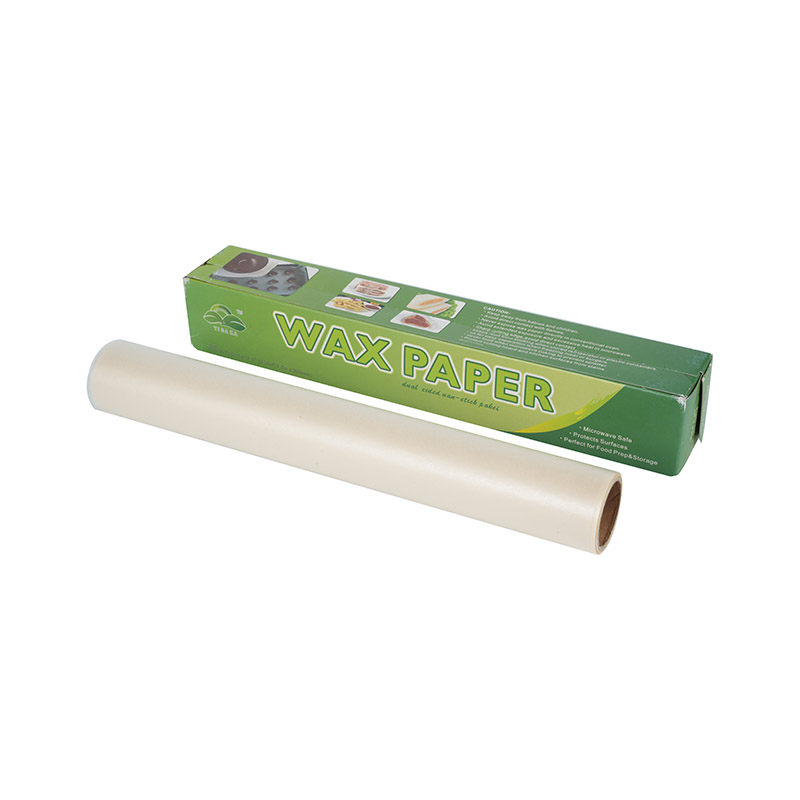
It's worth being clear about what baking paper is not. It is not the same as wax paper, which has a wax coating that melts under oven heat and is not safe for baking. It is not greaseproof paper in the traditional sense — standard greaseproof paper resists oil but is not silicone-coated and will stick to food if used without additional greasing. True baking parchment sheets are coated with a thin layer of silicone on one or both sides, which is what gives them their non-stick and heat-resistant properties. This distinction matters when reading packaging, since some brands use these terms loosely.
Types of Baking Paper Sheets and How They Differ
Not all baking paper sheets are made the same way, and the differences affect performance, temperature tolerance, and how they hold up under different cooking conditions. Knowing the main types helps you choose the right product for your specific use rather than defaulting to whatever is cheapest on the shelf.
Silicone-Coated Parchment Sheets
These are the standard for most baking applications. A silicone coating — applied to one or both sides — gives the paper its non-stick surface and raises its heat tolerance to around 220–230°C (425–450°F) for most consumer-grade products. Double-sided silicone coating is worth the small price premium because it means the sheet stays non-stick regardless of which side faces up, and it performs more consistently when moisture or fat saturates the paper from both directions during roasting. For everyday cookie baking, bread lining, and cake tin prep, silicone-coated parchment sheets are the reliable default choice.
Unbleached vs Bleached Baking Paper
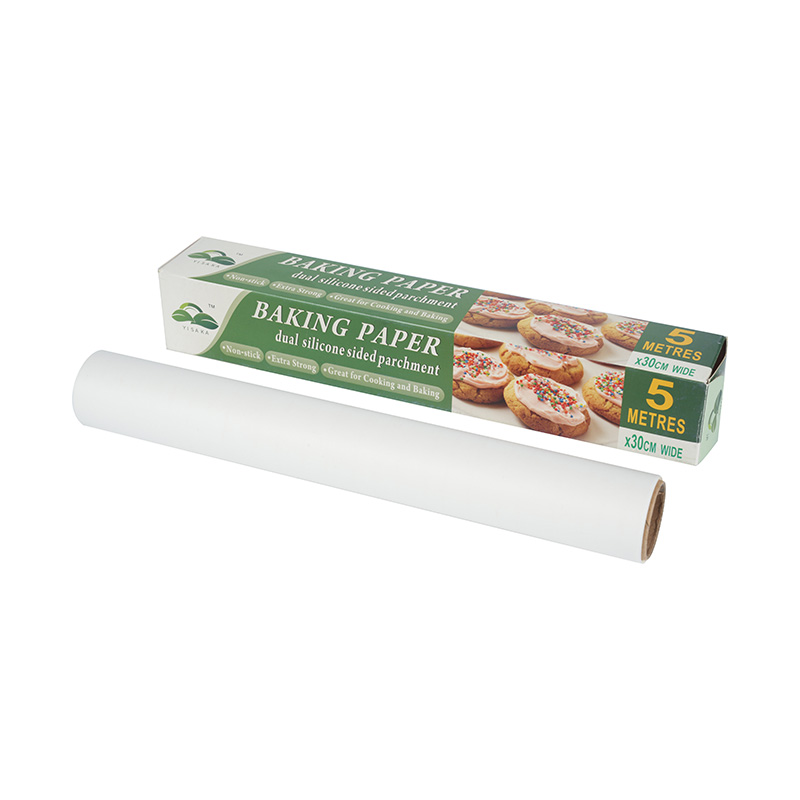
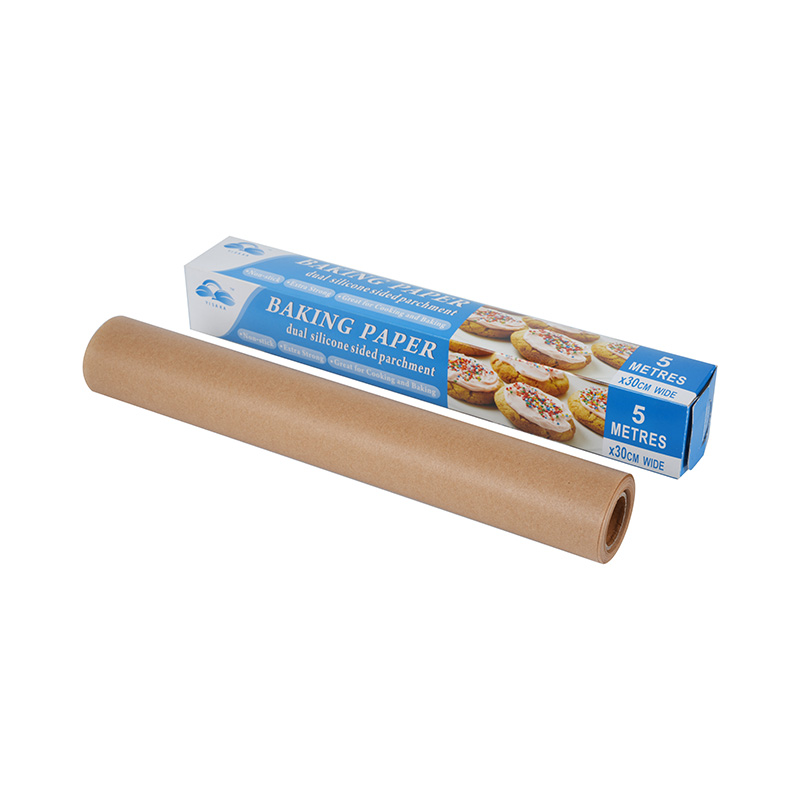
Baking parchment sheets come in two color variants: white (bleached) and brown (unbleached). White sheets are treated with chlorine or oxygen bleaching during manufacturing to achieve a uniform appearance. Brown unbleached sheets skip that step, which some bakers prefer for food contact reasons, though modern oxygen-bleached white paper poses no meaningful risk at normal baking temperatures. Performance-wise, both types are functionally equivalent in terms of non-stick behavior and heat resistance. The choice between them is largely a personal or brand preference decision rather than a technical one.
Quilon-Coated vs Silicone-Coated
Older baking paper products used Quilon — a chromium-based release coating — rather than silicone. Quilon-coated sheets are still available, particularly in food service supply channels, but silicone-coated options have largely replaced them in retail and professional baking because silicone is more heat-stable, more durable under moisture, and free from the chromium chemistry concerns associated with Quilon. If you're sourcing baking paper for commercial or high-volume use, it's worth confirming the coating type with your supplier, particularly if you're working in a setting with food safety certifications that specify coating materials.
Standard Sizes and How to Match Them to Your Trays
Pre-cut baking paper sheets are sold in sizes designed to fit common tray and tin dimensions, but sizing is not universally standardized across brands or regions. A sheet labeled "half sheet" in the US corresponds to approximately 330 x 430mm (13 x 17 inches), while European standard sheets more commonly come in sizes calibrated to GN (Gastronorm) tray dimensions used in professional kitchens. For home bakers, the most practical approach is to measure your most-used trays before buying and compare against the product dimensions on the packaging.
| Sheet Name | Approximate Size | Typical Use |
| Full Sheet | 660 x 460mm (26 x 18 in) | Commercial ovens, large roasting pans |
| Half Sheet | 430 x 330mm (17 x 13 in) | Standard home baking tray, cookies, sheet cakes |
| Quarter Sheet | 230 x 330mm (9 x 13 in) | Small batch baking, toaster ovens |
| Round (8 or 9 inch) | 200mm / 230mm diameter | Cake tins, cheesecake bases |
| GN 1/1 (European standard) | 530 x 325mm | Professional kitchen trays, catering |
If your tray size falls between standard sheet dimensions, slightly oversized is always preferable to undersized. A sheet with a small overhang at the edges is easy to fold down; a sheet that doesn't reach the pan edges leaves bare metal that food can stick to, which defeats the purpose. Avoid sheets so large that they curl up significantly against the pan sides — this can cause uneven baking by blocking airflow and creating hot spots.
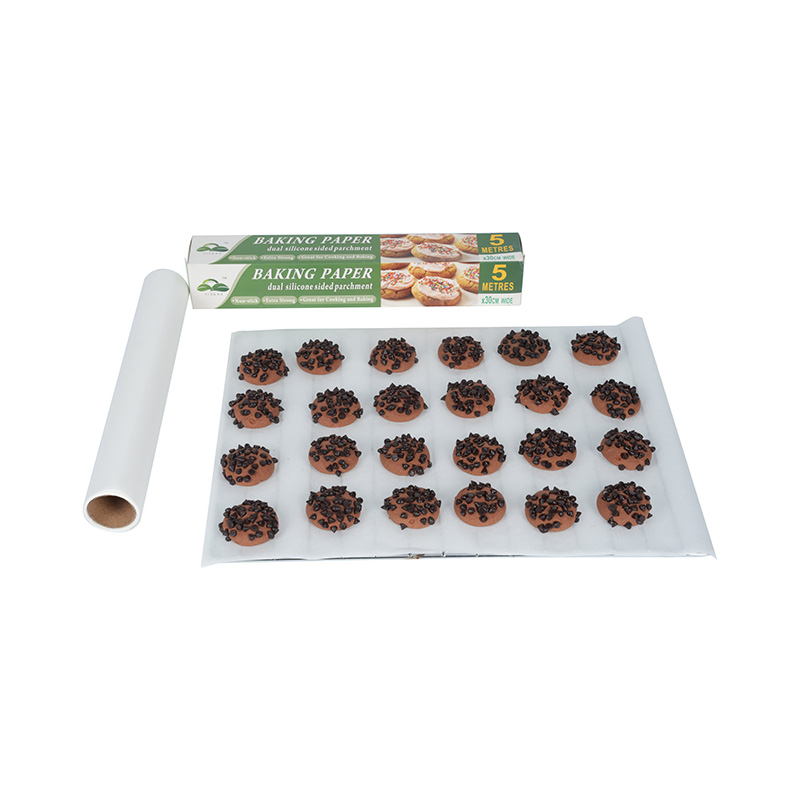
Temperature Limits: What Your Baking Paper Can Actually Handle
Every baking paper product has a temperature ceiling, and exceeding it causes the paper to scorch, smoke, or in some cases ignite. Most standard silicone-coated parchment sheets are rated to around 220°C (425°F). Some heavy-duty or professional-grade products extend that rating to 260°C (500°F). The temperature stated on the packaging is a safe continuous-use limit, not an instantaneous flash point — the paper can briefly exceed it without immediate failure, but sustained exposure above the rated temperature degrades the coating and eventually the paper itself.
In practice, the risk zone for most home bakers is high-heat roasting and pizza baking. A domestic oven running at 250°C (480°F) for a pizza stone or a high-temperature roast is at or above the limit for standard baking paper sheets. For these applications, either use a product specifically rated for higher temperatures, switch to a reusable silicone mat, or skip the liner entirely and use a well-seasoned or naturally non-stick surface. Never use standard baking paper under a broiler or grill element — direct radiant heat from above will ignite it regardless of the oven's ambient temperature setting.
Temperature Quick Reference
- Under 180°C (350°F): All standard baking paper sheets perform safely — cookies, muffins, sponge cakes, slow roasting
- 180–220°C (350–425°F): Within safe range for most products — bread, roasted vegetables, tray bakes
- 220–260°C (425–500°F): Requires heavy-duty or high-temp rated parchment — pizza bases, high-heat roasting
- Above 260°C (500°F) or under broiler: Do not use baking paper — use foil, a silicone mat, or an unlined seasoned pan
Practical Uses for Pre-Cut Baking Paper Sheets
Pre-cut parchment sheets are useful well beyond just lining cookie trays. Once you have a supply of the right size on hand, you'll find them coming out for tasks that aren't strictly baking — and they perform consistently across all of them.
Cookies and Biscuits
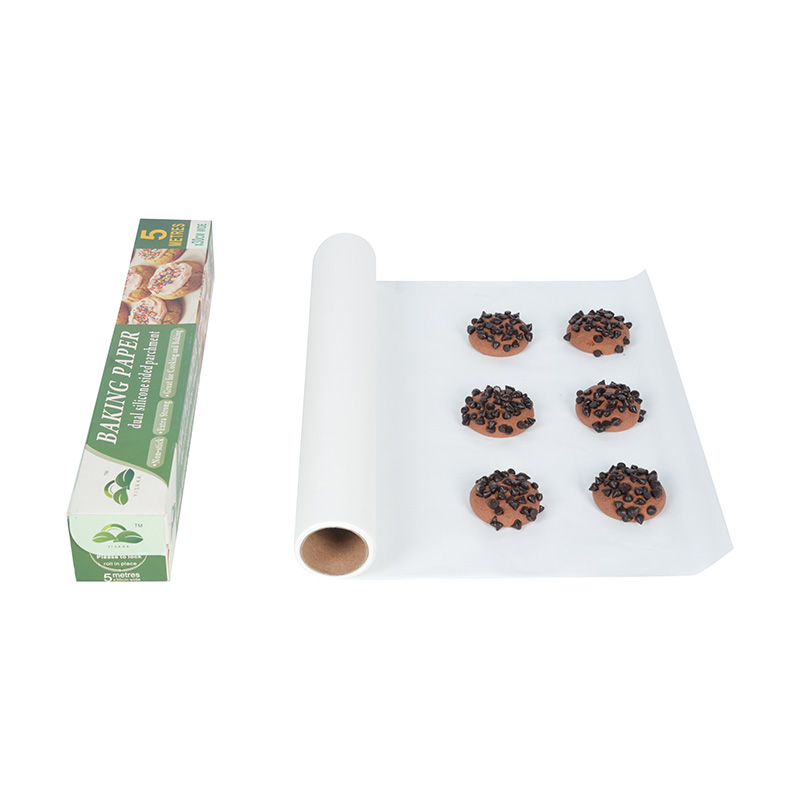
This is the most common use, and baking paper sheets do it better than any alternative. Cookies release cleanly without greasing, the sheet can go straight from the oven to a cooling rack, and the same sheet can be reused for two or three batches before it starts to brown and degrade. For delicate cookies like tuiles, florentines, or thin lace cookies that would tear if lifted off a greased tin, a non-stick parchment sheet is not optional — it's the only practical liner.
Lining Cake Tins
Round pre-cut parchment sheets sized to fit standard cake tins eliminate one of the more fiddly parts of cake preparation — cutting a circle from a roll and trying to fit it neatly into the base of a tin. For square or rectangular loaf tins, a half-sheet or quarter-sheet cut to size and pressed into the tin with overhanging edges on two sides creates a sling that makes it easy to lift the finished cake out cleanly without inverting. This technique is particularly useful for dense or sticky bakes like brownies, flapjacks, and fruit cakes where tin adhesion is a genuine risk.
Roasting Vegetables and Meat
Lining a roasting tray with baking paper before adding vegetables or meat reduces caramelized-on residue significantly. Food still browns and crisps on the underside — the paper conducts heat well enough for this — but the tray itself stays largely clean. One practical note: for very fatty roasts or dishes with a lot of rendered liquid, the paper can become saturated and start to break down toward the end of a long roast. For anything over 90 minutes at high heat, check the paper halfway through and replace it if it looks significantly darkened or wet through.
Steaming and Parcel Cooking
Baking paper sheets are the standard material for cooking en papillote — the French technique of sealing fish, vegetables, or chicken in a folded paper parcel and baking it to steam in its own moisture. A half-sheet parchment is typically large enough to fold around a single portion. The paper handles the steam and fat without leaking, and the parcel goes directly to the plate, making for an elegant presentation with minimal washing up. The same approach works in a steamer basket: a sheet of parchment placed under fish or dumplings prevents them from sticking to the basket while still allowing steam to circulate.
How to Get More Than One Use Out of Each Sheet
Pre-cut baking paper sheets are not single-use by design — they can be reused multiple times as long as they haven't been used at very high temperatures, haven't torn, and haven't been heavily soiled with burnt-on fat or sugar. A sheet used for a batch of butter cookies at 180°C will typically come through clean enough to reuse two or three more times. After use, wipe off any crumbs, allow the sheet to cool fully, and store it flat or loosely rolled rather than folded — repeated folding creates creases that cause the sheet to buckle on the tray during the next use.
Discard a sheet when it starts to discolor significantly (deep brown rather than light tan), when the surface feels rough or degraded rather than smooth, or when food starts to stick in areas where it previously released cleanly. These are signs the silicone coating has broken down and the sheet is no longer performing as intended. Continuing to use degraded parchment is less a safety issue than a practical one — the whole point is reliable non-stick performance, and a worn sheet no longer delivers that consistently.
Buying Baking Paper Sheets: What to Look for on the Label
Baking paper is one of those products where packaging claims vary widely and don't always reflect meaningful differences in performance. These are the things actually worth checking before buying:
- Temperature rating: Should be clearly stated in °C or °F. Any product without a temperature rating stated on the pack is worth approaching with caution
- Single vs double-sided silicone coating: Double-sided is more versatile and more durable — worth the small premium for regular use
- Grammage (GSM): Heavier paper (typically 40–60 GSM for quality products) holds its shape better on the tray and is less prone to tearing when wet
- Sheet dimensions: Always check the actual dimensions in millimeters or inches against your trays — "standard" means different things to different brands
- Food safety certification: Look for EU food contact compliance (Regulation EC 1935/2004) or FDA food contact compliance for US products — confirms the paper and coating are safe for direct food contact at rated temperatures
- Count per pack: For regular bakers, buying in larger packs (100–500 sheets) from a catering supply source is significantly cheaper per sheet than retail multipacks of 20–30