 English
 русский

Every busy kitchen has a small ritual at its heart: tearing off a sheet of oven baking paper, smoothing it across a tray, and knowing that whatever comes out of the oven will lift away cleanly. It is the least glamorous item in the drawer, and quite possibly the one you reach for most.
We have spent more than a decade making that paper — silicone-coated rolls, cut sheets and pan liners that leave our factory in Hangzhou for bakeries, restaurant chains and packaging distributors in over thirty countries. Along the way we have answered a lot of questions from people standing in front of an oven with a sheet in their hand. Here is what we have learned about using it well.
Content
What Oven Baking Paper Really Is
Oven baking paper is a simple idea executed with some precision. Food-grade base paper, usually virgin wood pulp, runs through a coating line where a very thin film of silicone is cured onto one or both surfaces. The silicone is the hero of the story: it lowers the surface energy of the sheet, so sugar, melted cheese and caramelised protein cannot grip the fibres underneath.
Grammage and coating weight decide how the paper behaves in your hand. A light 38–40 gsm sheet drapes neatly over a cake tin and folds into corners. A 60–80 gsm sheet feels closer to cloth, resists tearing when you slide a heavy roast off the tray, and often survives two or three rounds of baking before it needs replacing. Double-sided silicone earns its keep when you flip a sheet over or stack several for a batch of macarons.
White and unbleached versions perform the same way in a hot oven. The difference is mostly appearance, plus how much chlorine-free pulp a buyer wants to keep in the supply chain.
For kitchens that move between roasting, grilling and air frying, a versatile sheet saves a lot of rummaging through the drawer:
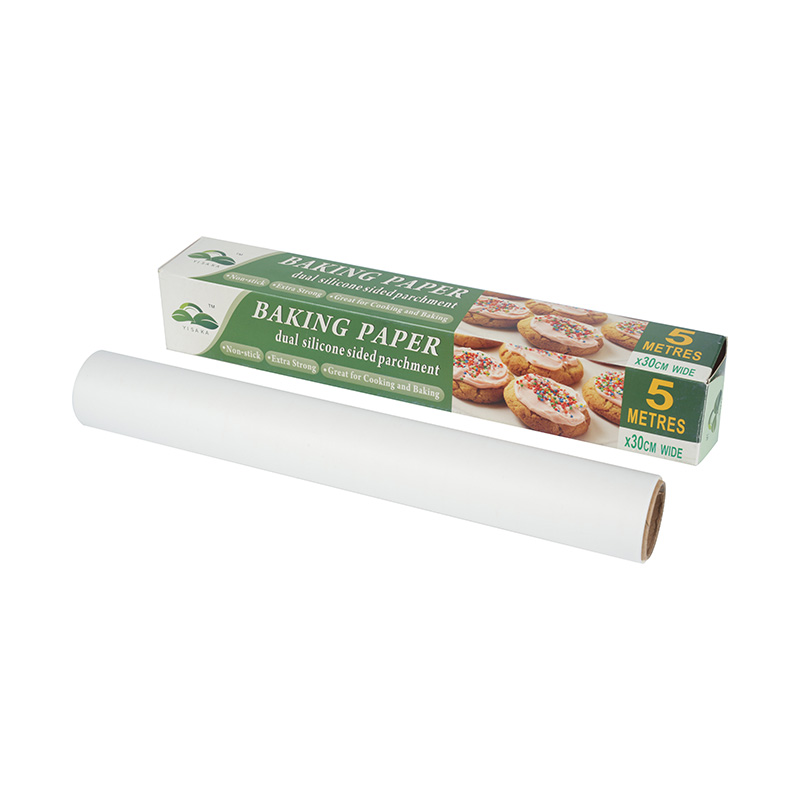
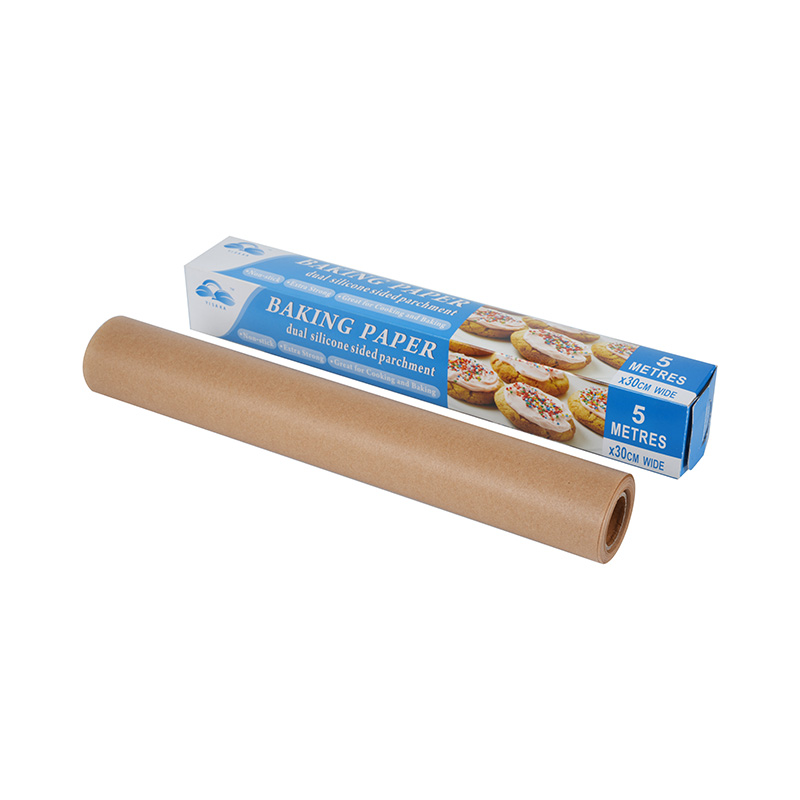
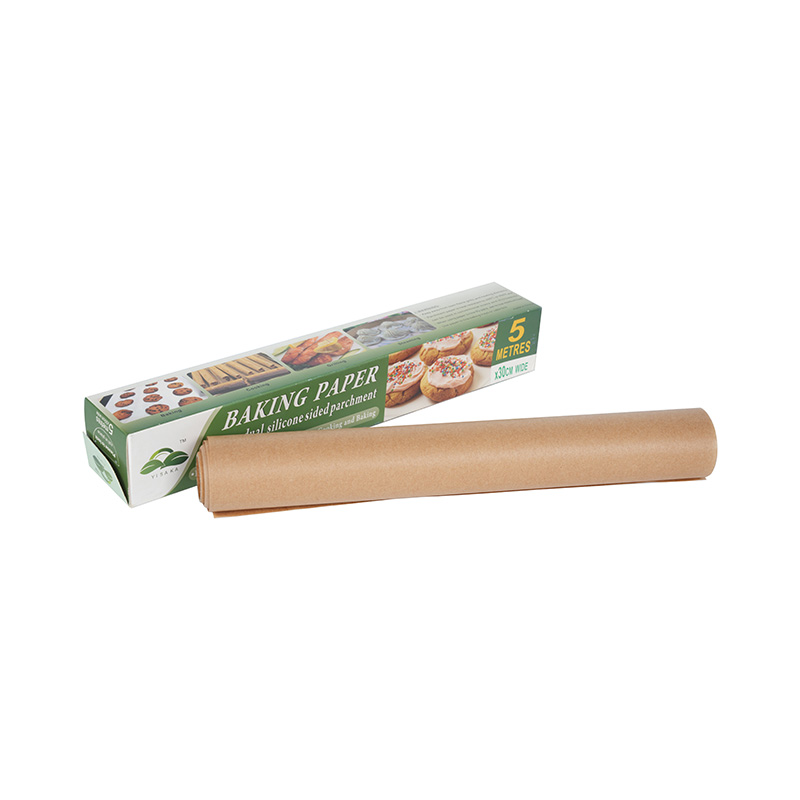 YISAKA Multi-Purpose Baking Paper for Oven and Air FryerA versatile roll-and-sheet liner for roasting, grilling and air frying, made from food-grade virgin pulp with double-sided silicone for high-temperature kitchen use.View Product →
How Hot Can Oven Baking Paper Safely Go?
Most commercial baking paper is rated to about 220°C / 425°F, and heavy-duty or double-sided silicone versions often reach 230–250°C / 450–480°F. That is well above the temperature of a normal bake, which is why the paper simply browns slightly at the edges rather than catching fire.
The reason it behaves so calmly is chemistry. Silicone is stable far beyond domestic oven temperatures, and the cellulose underneath does not burst into flame — it chars. Paper that has spent an hour at 230°C will look toasted and brittle, but it will not ignite on its own. Problems usually start when a loose corner lifts into a heating element or a fan, which is why trimming overhang and weighing the paper down with food matters more than the printed number on the box.
| Paper type | Typical heat rating | Where it works best |
|---|---|---|
| Standard silicone baking paper | 220°C / 425°F | Cookie sheets, vegetables, everyday tray lining |
| Heavy-duty baking paper | 230–250°C / 450–480°F | Roasting, high-heat bakes, reusable sheets |
| Silicone-coated pan liner | 220°C / 425°F | Batch baking, rigid trays, long production runs |
| Wax paper | Around 60–70°C / 140–160°F | Wrapping, chilling and storage, never the oven |
| Greaseproof paper | No oven rating | Wrapping, separating, basket and tray lining |
One caution worth repeating: a grill or broiler setting is not the same as baking. Radiant heat from an element only a few centimetres away can scorch even a good sheet in under a minute, so keep paper well below the source of heat and never leave it there unattended.
Where a Sheet of Baking Paper Earns Its Place
Walk through a working kitchen and the same jobs keep appearing:
- Lining sheet pans for biscuits, scones and roasted vegetables so nothing welds itself to the metal.
- Roasting chicken, fish or traybakes, where the paper collects the caramelised juices and turns washing up into a ten-second job.
- Folding en papillote parcels that trap steam and keep delicate fillets moist.
- Protecting the base of bread and pizza dough from scorching before the crumb is ready.
- Separating sticky bakes, nougat and confectionery while they cool and set.
- Stacking portions in the freezer without them fusing into one solid block.
Beyond the Oven: Air Fryers, Steamers and Microwaves
The same silicone coating makes baking paper a natural fit for air fryer baskets and steamers, where food tends to grip and where perforated or shaped liners let air and steam circulate. In an air fryer, always place food on top of the paper so the fan cannot lift a dry corner into the heating coil. In a microwave, short bursts are fine; a bare sheet with nothing on it will curl and can scorch at the edges.
When you want a clean white sheet that handles lining, roasting, steaming and even candy work without complaint, this is the workhorse we recommend:
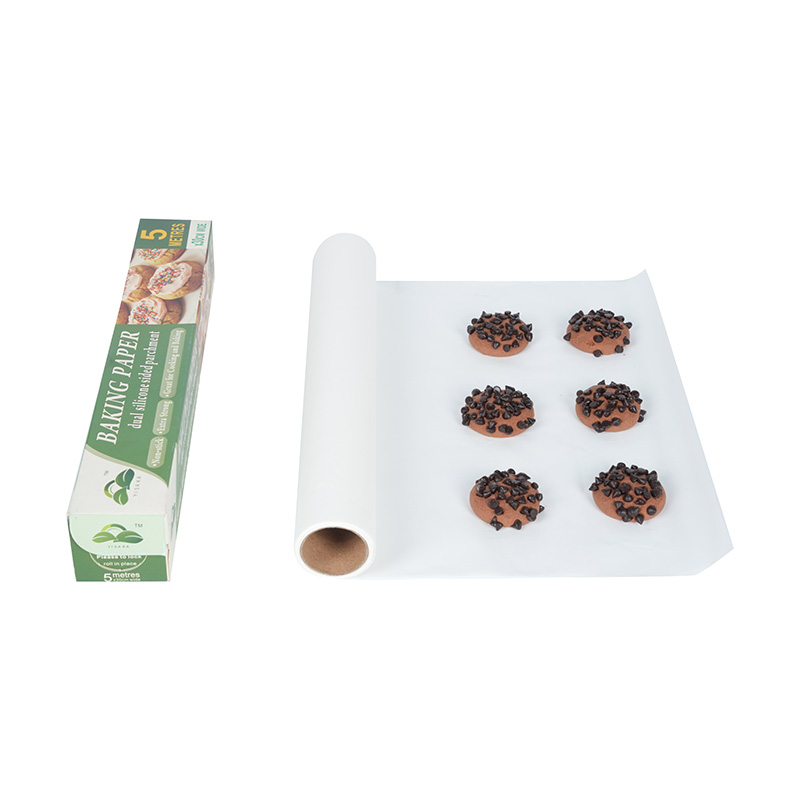 White Non-Stick Baking Paper for Lining and RoastingA white, double-sided silicone-coated sheet for lining pans, roasting, steaming and candy making, helping prevent sticking and simplifying cleanup across everyday oven tasks.View Product →
Baking Paper, Wax Paper and Greaseproof Paper Are Not Interchangeable
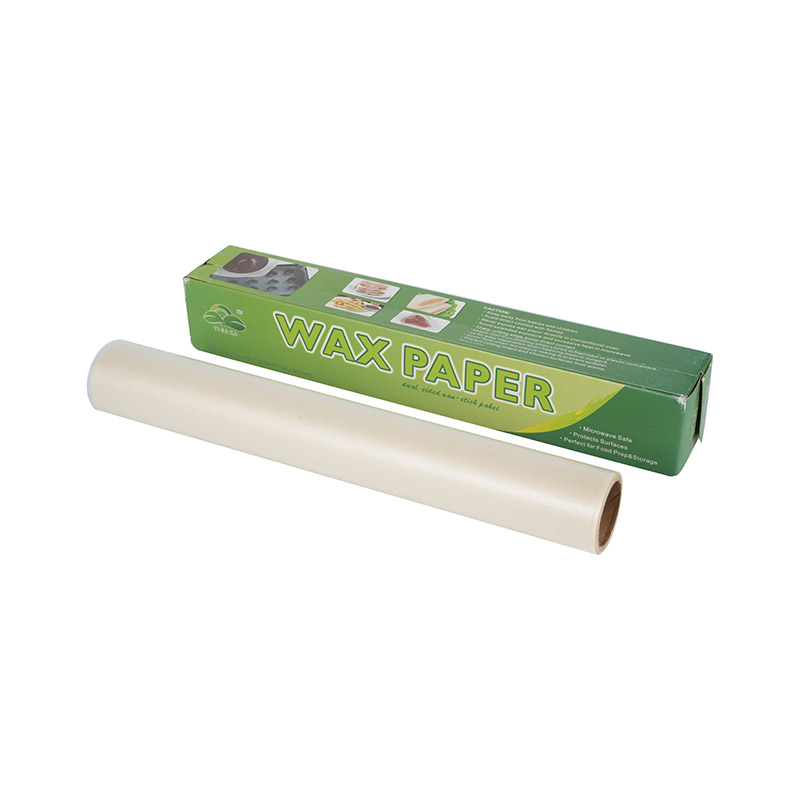
The three live side by side on supermarket shelves, and the confusion between them causes more ruined batches than almost anything else. Wax paper is base paper saturated with food-grade wax, which gives it excellent moisture resistance and makes it ideal for wrapping sandwiches, cheese and meat — but that wax melts at fairly low temperatures, so it belongs nowhere near a hot oven.
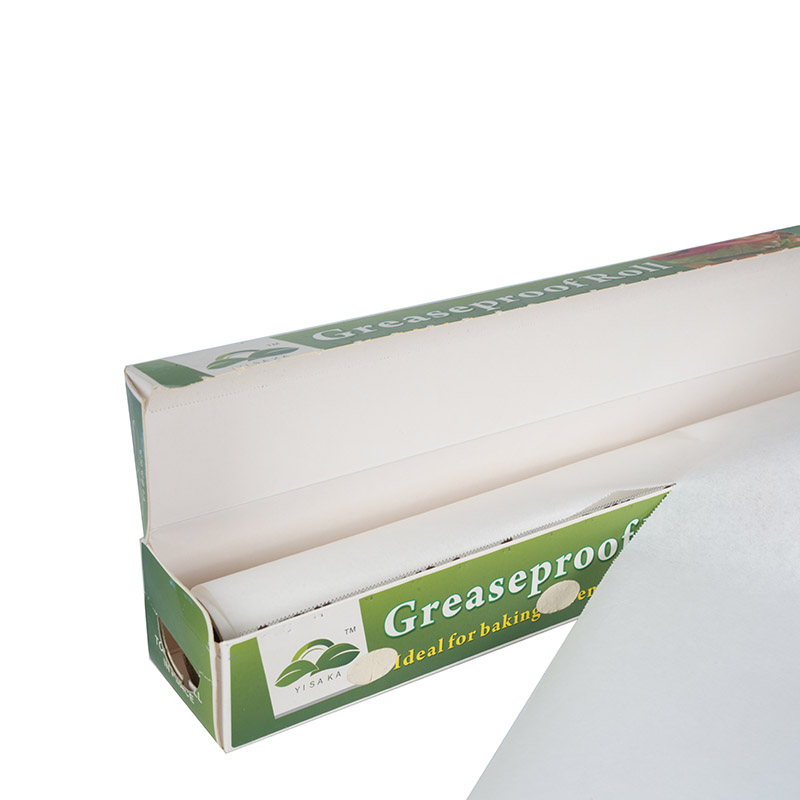
Greaseproof paper resists oil and fat through how its fibres are beaten rather than through a coating, and it has no meaningful heat rating. It is a packaging and separating material: burger wraps, basket liners, layers between portions. Baking paper, by contrast, is the only one of the three engineered specifically to release food at oven temperatures. If you have ever peeled a cake off a tray lined with the wrong paper, you already know the difference. For a deeper look at how these materials behave in service, our team put together a practical note on oven paper worth a few minutes of your time.
Matching the Paper to the Job You Actually Do
Home bakers can afford to grab whatever roll is nearest. Food businesses cannot, because the wrong specification shows up as wasted labour, torn sheets mid-service and complaints about sticking.
- Measure the tray first. A 40 cm wide roll on a 60 cm tray means overlapping sheets and wasted material; cut sheets sized to your pans pay for themselves quickly.
- Decide between a roll, a sheet and a rigid liner. Rolls suit wrapping and small tins, flat sheets suit high-volume lining, and silicone-coated liners suit trays that go through hundreds of cycles.
- Check the certification trail relevant to your market: FDA and EU compliance for food contact, FSC for fibre sourcing, Kosher where required, and third-party testing such as SGS.
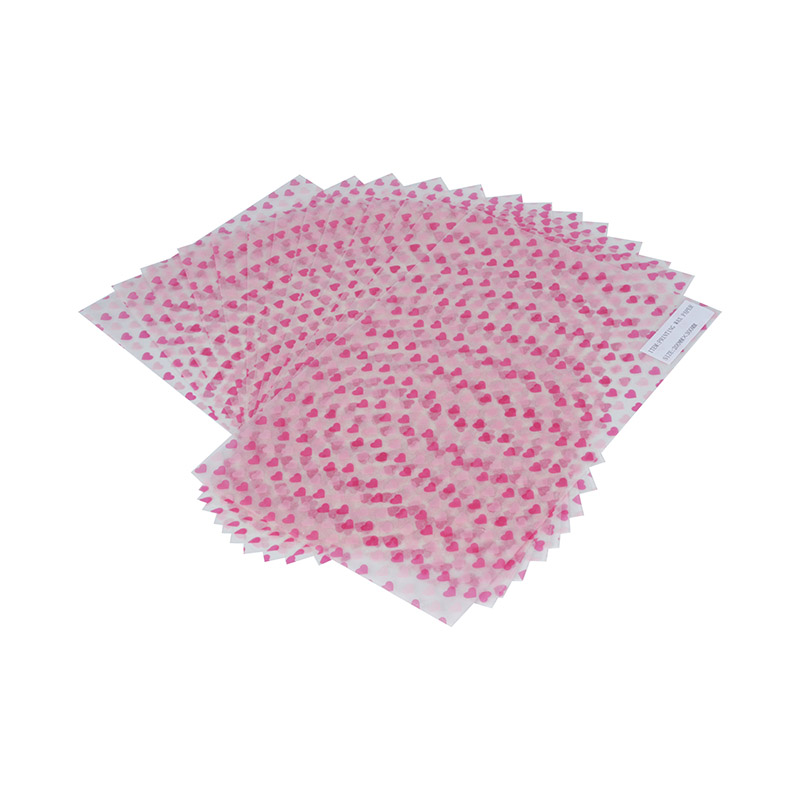
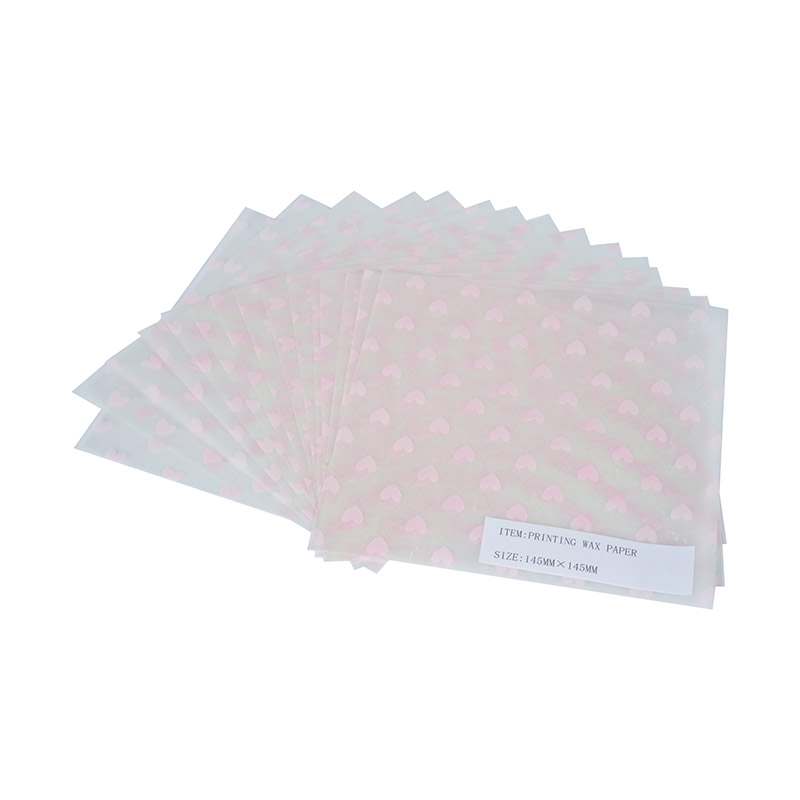
- Ask about printing and custom dimensions if your packaging doubles as branding, which is common in takeaway and retail.
Rigid liners are the quiet favourite in high-volume kitchens, because they hold their shape when a tray is loaded and reloaded all day:
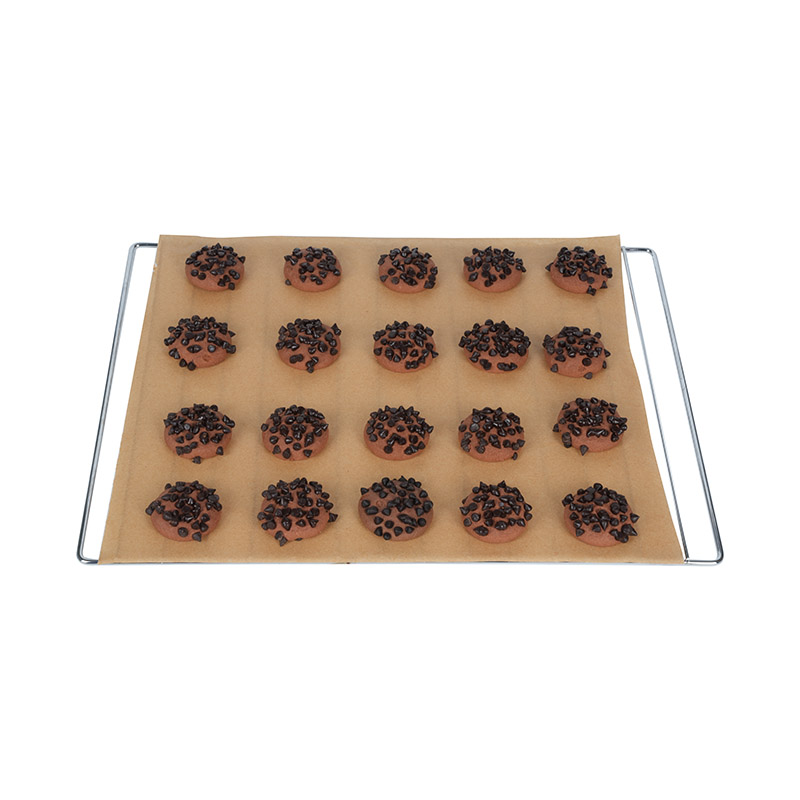 Non-Stick Silicone-Coated Pan Liner for RoastingA double-sided silicone-coated pan liner for baking and roasting that helps prevent sticking, reduce oil use, and simplify cleanup on loaded trays.View Product →
Small Habits That Keep Paper Performing
- Store rolls and sheets somewhere dry and flat; creases become weak points that tear when a heavy tray slides across them.
- Never preheat an empty oven with loose paper inside — a fan or a hot element will find it.
- Trim the overhang so paper sits inside the pan rim rather than reaching for the heat source.
- Reuse a sheet when it is clean and dry, but retire it once it is brittle, browned or greasy, since the silicone layer wears thin.
- Keep a separate stack for wrapping and storage jobs so no one accidentally sends wax paper into a hot oven.
None of this is complicated, and that is exactly why oven baking paper quietly became one of the most reliable tools in professional and home kitchens alike. Get the rating right, match the sheet to the tray, keep it away from direct heat, and it will keep doing the one thing you asked of it: letting good food come away cleanly, every single time.