 English
 русский
Content
- 1 What Are Air Fryer Paper Liners and Why Are So Many People Using Them?
- 2 How Air Fryer Parchment Liners Actually Work Inside the Basket
- 3 Types of Air Fryer Paper Liners Available
- 4 Choosing the Right Size Air Fryer Paper Liner for Your Model
- 5 Safety Rules You Must Follow When Using Air Fryer Parchment Liners
- 6
- 7 What Foods Work Best with Air Fryer Paper Liners
- 8 Air Fryer Paper Liners vs. Silicone Liners vs. Aluminum Foil
- 9 Tips for Getting the Best Results from Air Fryer Parchment Liners
- 10 Making Your Own DIY Air Fryer Parchment Liners from a Roll
What Are Air Fryer Paper Liners and Why Are So Many People Using Them?
Air fryer paper liners are pre-cut, food-safe parchment sheets designed to sit inside your air fryer basket or tray during cooking. They act as a barrier between your food and the basket surface, catching drips, grease, and food particles so they do not bake onto the mesh or perforated base. The result is faster cleanup, less scrubbing, and a basket that stays in better condition for longer. It is no surprise that air fryer parchment paper liners have become one of the most popular air fryer accessories on the market — they solve one of the most common frustrations people have with air fryers: the tedious process of scrubbing stuck-on residue out of a perforated metal basket after every use.
Air fryer paper liners are made from food-grade parchment paper, the same silicone-coated cellulose material used in baking. They are heat-resistant up to around 230°C (450°F), non-stick, and grease-resistant. Most come pre-punched with small holes that allow hot air to circulate through the liner and around the food — preserving the rapid convection cooking that makes air fryers so effective in the first place. They are available in round, square, and rectangular shapes, and in a wide range of sizes to fit popular air fryer basket dimensions from compact 2-quart models up to large 8-quart family-sized units.
How Air Fryer Parchment Liners Actually Work Inside the Basket
To understand why the perforations in air fryer parchment liners matter so much, it helps to understand how an air fryer generates heat. An air fryer is essentially a compact convection oven: a heating element above the basket heats air, and a powerful fan circulates that hot air at high speed around and beneath the food. This rapid air movement is what creates the crispy, browned exterior that mimics deep-frying without submerging food in oil.
When a solid sheet of parchment — such as a piece cut from a standard baking roll — is placed in an air fryer basket without holes, it blocks the airflow from reaching the underside of the food. This creates a steaming effect rather than a crisping effect, and the food sitting directly on the liner comes out soft and pale on the bottom rather than evenly golden. Pre-punched air fryer paper liners solve this by allowing airflow to pass through the liner while still catching drips and preventing sticking. The hole size and pattern vary between brands, but the principle is the same: maximum grease-catching with minimum airflow restriction.
Types of Air Fryer Paper Liners Available
Not all air fryer paper basket liners are made the same way, and the differences between types matter for performance, food safety, and environmental impact.
Perforated Parchment Liners
The most common type, these are cut from food-grade parchment paper and pre-punched with a pattern of small holes across the surface. They are coated with food-safe silicone, which gives them their non-stick properties and heat resistance. Most are unbleached (natural brown color) or bleached white, with the unbleached versions sometimes preferred for avoiding residual chemicals associated with chlorine bleaching. These liners work well for the vast majority of air fryer cooking tasks.
Solid (Non-Perforated) Parchment Liners
Some air fryer paper liners are sold without holes, intended for use in air fryer ovens with tray-style cooking surfaces rather than basket-style units, or for specific tasks like reheating saucy dishes or baking where containing liquid is more important than airflow. Using a solid liner in a basket air fryer will reduce crisping performance and is only appropriate when the food being cooked is liquid-heavy — such as marinated items, eggs, or layered dishes — and where some sacrifice of crispiness is acceptable in exchange for containing the mess.
Bamboo and Natural Fiber Liners
A growing category of eco-friendly air fryer liners uses bamboo fiber pulp rather than wood-pulp parchment as the base material. These are marketed as more sustainable and biodegradable than conventional parchment liners. Performance is generally comparable for most cooking tasks, though some bamboo liners are slightly less grease-resistant than silicone-coated parchment and may require more careful matching to the right temperature range. Always confirm that bamboo liners are certified food-safe and heat-rated appropriately before use.
Cupcake-Style Cup Liners
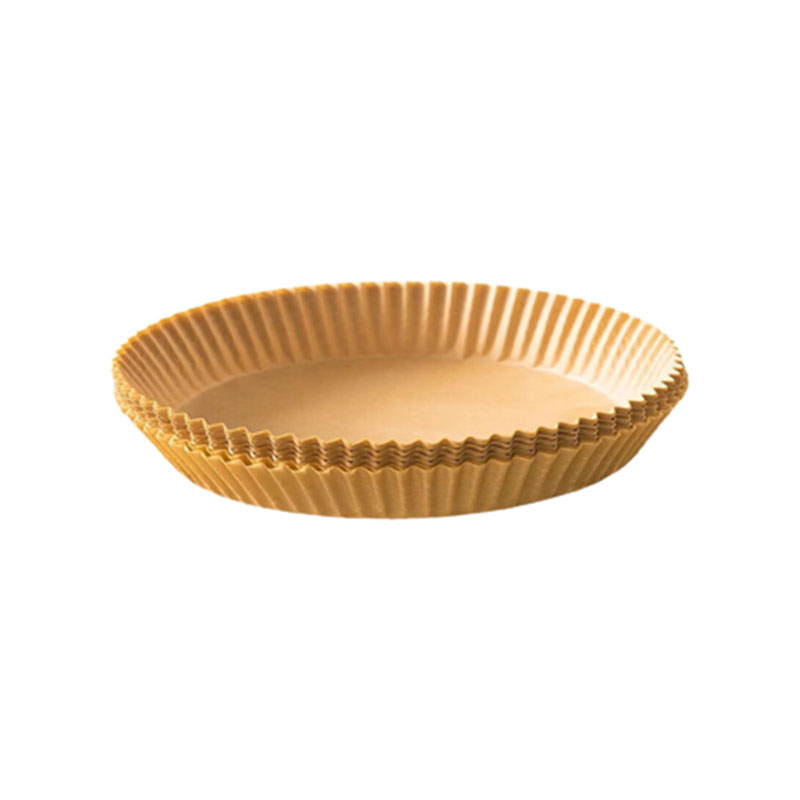
For cooking individual portions — eggs, mini muffins, stuffed mushrooms, or small dumplings — parchment cup liners shaped like cupcake cases are a convenient alternative to flat basket liners. These sit upright in the basket, contain any liquid runoff, and keep individual items neatly separated. They are particularly useful for air fryer egg cooking or for making small batch baked goods directly in the air fryer basket without a dedicated baking insert.
Choosing the Right Size Air Fryer Paper Liner for Your Model
Getting the right size is the single most important practical consideration when buying air fryer parchment paper liners. A liner that is too small leaves part of the basket unprotected and allows food to slip underneath and onto the bare mesh. A liner that is too large curls up at the edges and either touches the heating element — a fire hazard — or folds over the food and restricts the cooking airflow in an uncontrolled way.
| Air Fryer Capacity | Typical Basket Shape | Recommended Liner Size | Common Brands That Fit |
| 2–3 Quart | Round or Square | 15 cm (6 inch) round | Dash, Ninja Mini, GoWISE 2.75 qt |
| 3.5–4 Quart | Round or Square | 18 cm (7 inch) round / 16 cm square | Philips HD9252, Cosori 3.7 qt, Instant Vortex 4 qt |
| 5–5.8 Quart | Round or Square | 20 cm (8 inch) round / 18 cm square | Cosori 5.8 qt, Ninja AF101, GoWISE 5.8 qt |
| 6–7 Quart | Square or Rectangular | 22 cm (8.5 inch) square | Ninja Foodi 6.5 qt, Instant Vortex Plus 6 qt |
| 8–10 Quart | Square or Rectangular | 25–26 cm (10 inch) square | Ninja XL, Cosori 12 qt Oven, Breville Smart Oven |
If you are unsure of the exact basket dimensions, measure the interior base of your basket at its narrowest point across the flat cooking surface — not the outer diameter of the entire basket. The liner should fit comfortably within this area with at least 1–2 cm of clearance from the basket walls on each side, so that it lies flat rather than curling upward.
Safety Rules You Must Follow When Using Air Fryer Parchment Liners
Air fryer paper liners are safe when used correctly, but there are several important safety rules that are frequently overlooked — and that can lead to fires or damaged equipment if ignored.
- Never preheat the air fryer with an empty liner inside: This is the most common and most dangerous mistake. An empty liner — with no food weighing it down — will be lifted by the powerful fan and blown directly into the heating element, where it will catch fire instantly. Always place food on the liner before starting the air fryer, so the weight of the food keeps it in place.
- Never use a liner that is larger than the basket: Oversized liners that extend up the sides of the basket can fold over toward the heating element during cooking. Even if it does not immediately catch fire, prolonged contact with a heat source will scorch, smoke, and eventually ignite the parchment. Always use the correctly sized liner for your specific basket.
- Check the temperature rating before use: Most air fryer parchment liners are rated to 230°C (450°F). Most air fryer cooking happens between 160°C and 210°C, well within this range. However, some air fryers can reach 260°C (500°F) at their maximum setting. Always confirm the liner's rated temperature and avoid using parchment liners at settings that exceed it.
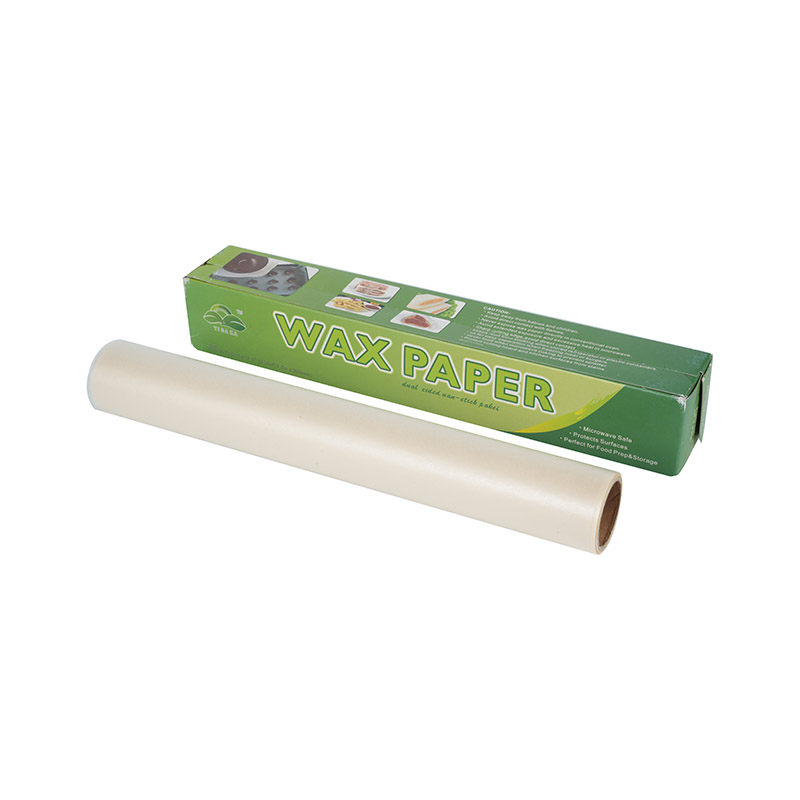
- Do not use wax paper as a substitute: Wax paper is coated with paraffin wax rather than silicone and is not heat-resistant. It will melt and smoke at air fryer temperatures and should never be used as a liner alternative. Only use products specifically labeled as parchment or baking paper with an appropriate heat rating.
- Avoid using liners for very fatty, high-drip foods at high temperatures: For foods like thick-cut bacon or very fatty sausages cooked at maximum temperature, the volume of rendered fat pooling on the liner can potentially cause smoke or flare-up in extreme cases. For extremely fatty items, cooking directly on the basket with a drip tray below is safer than using a liner that collects all the fat in one place near the heating element.
What Foods Work Best with Air Fryer Paper Liners
Air fryer basket liners are not the ideal choice for every food, but they deliver real benefits for a wide range of common air fryer recipes. Here is a practical breakdown of which foods benefit most and which are better cooked without a liner:
Foods That Work Great on Parchment Liners
- Dumplings, gyoza, and wontons: These are among the best uses for liners. The delicate dough wrappers stick aggressively to bare metal baskets when the starch gelatinizes during cooking. A parchment liner releases them cleanly every time without tearing.
- Fish and seafood: Fish skin, crab cakes, and shrimp all have a tendency to stick and fall apart when lifted off a bare basket. A liner provides a clean release surface and catches any juices that would otherwise burn onto the mesh.
- Marinated or sauced meats: Chicken wings in sticky sauce, glazed pork chops, or teriyaki tofu all create significant cleanup challenges on a bare basket. Liners catch the caramelized drips and make post-cook cleaning a matter of lifting out the liner and wiping the basket rather than soaking and scrubbing.
- Egg-based dishes: Fried eggs, mini frittatas, or egg bites cooked in parchment cup liners release cleanly and retain their shape — something nearly impossible to achieve on a bare perforated metal surface.
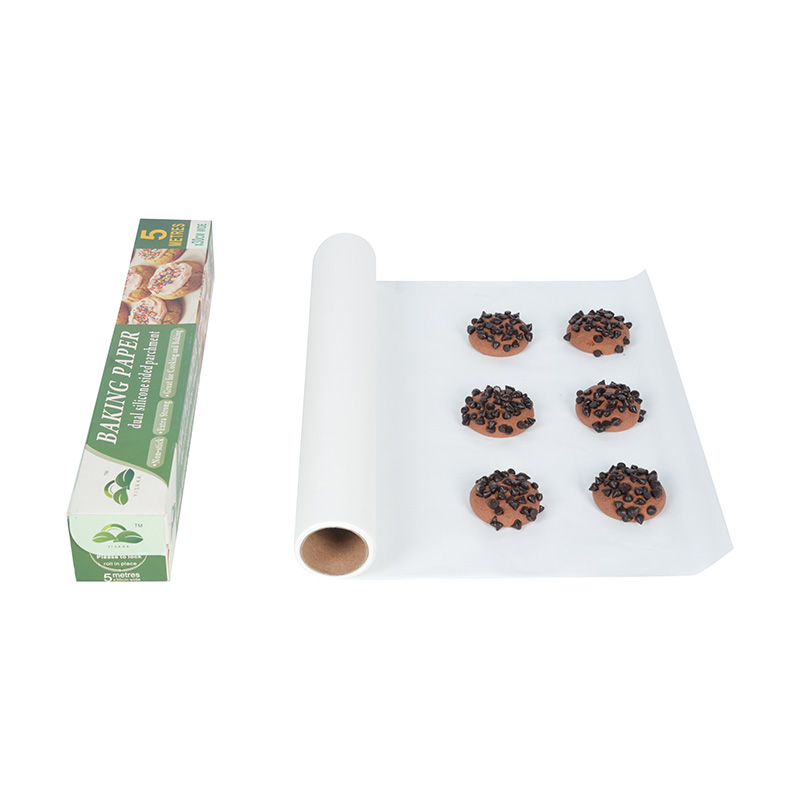
- Baked goods: Cookies, brownies, small cakes, and muffins baked in the air fryer benefit enormously from a liner, which prevents the sugary bottoms from fusing to the basket and provides an easy surface to slide a spatula under.
Foods Better Cooked Without a Liner
- Frozen french fries and chips: These cook best with maximum hot air circulation around every surface. A liner under a pile of fries reduces the crisping of the bottom layer. Shaking the basket halfway through cooking achieves better results without a liner for this food category.
- Chicken pieces with dry rubs: Dry-rubbed chicken thighs or drumsticks develop their crispiest skin when cooked directly on the basket where maximum air contact reaches all surfaces. The basket is relatively easy to clean after dry-rubbed meats compared to sauced ones.
- Vegetables tossed lightly in oil: Broccoli, Brussels sprouts, and asparagus benefit from direct basket contact and unrestricted airflow to achieve proper caramelization and charring on the edges. A liner slightly insulates the underside and reduces the browning effect.
Air Fryer Paper Liners vs. Silicone Liners vs. Aluminum Foil
Parchment paper liners are not the only option for protecting your air fryer basket. Silicone liners and aluminum foil are both widely used alternatives, and each has distinct trade-offs worth understanding before deciding which suits your cooking habits best.
| Feature | Parchment Paper Liners | Silicone Liners | Aluminum Foil |
| Airflow | Good (perforated) | Good (perforated) | Poor (must be pierced manually) |
| Non-stick Performance | Excellent | Very Good | Moderate (food can stick) |
| Reusability | Single use (disposable) | Reusable (100+ uses) | Single use (disposable) |
| Cleanup | Discard after use | Dishwasher safe | Discard after use |
| Acidic Food Safety | Safe | Safe | Avoid (leaching risk) |
| Cost Over Time | Ongoing (per use) | Low (one-time purchase) | Low per sheet |
| Environmental Impact | Moderate (single use) | Low (durable) | High (mining + disposable) |
For most home cooks, parchment paper air fryer liners offer the best balance of convenience and performance for everyday use. Silicone liners are the better long-term investment if you use your air fryer daily and want to reduce waste. Aluminum foil should be reserved for specific tasks — such as wrapping foods you want to steam or covering the top of a dish to prevent over-browning — rather than as a general basket liner, particularly when cooking acidic foods like tomatoes or citrus-marinated proteins.
Tips for Getting the Best Results from Air Fryer Parchment Liners
A few simple habits will help you get the maximum benefit from your air fryer paper liners and avoid the common pitfalls that frustrate first-time users.
- Always load the liner with food before starting the air fryer: As covered in the safety section, this is non-negotiable. The food weight anchors the liner and prevents it from flying into the heating element. Make it a habit to place the liner, then the food, then start the appliance — never the other way around.
- Give the liner a light spray of cooking oil for sticky foods: Even though parchment is inherently non-stick, adding a very light mist of cooking spray to the liner surface before placing delicate items like fish fillets or dumplings ensures a clean release every time and prevents the food surface from drying out on the underside.
- Do not stack food so high that it covers the basket sides: The perforations in the liner only help if air can also circulate around and above the food. Overfilling the basket presses food against the sides where the liner has no perforations and chokes the airflow needed for crisping. Cook in batches for best results with liner-based cooking.
- Use a liner every time for easy meals — skip it for crisping-focused foods: Develop a habit of reaching for a liner automatically for saucy, sticky, or delicate foods, and skipping it for dry-seasoned proteins and vegetables where maximum crisping is the goal. This selective approach keeps cleanup easy without sacrificing cooking performance.
- Buy liners in bulk for better value: Individual packs of 50–100 liners are considerably more cost-effective per sheet than smaller packs. Since each liner is single-use, having a generous supply on hand means you will actually reach for them consistently rather than rationing them. Look for multipacks that include a few different sizes if you have more than one air fryer or bake in a range of basket sizes.
Making Your Own DIY Air Fryer Parchment Liners from a Roll
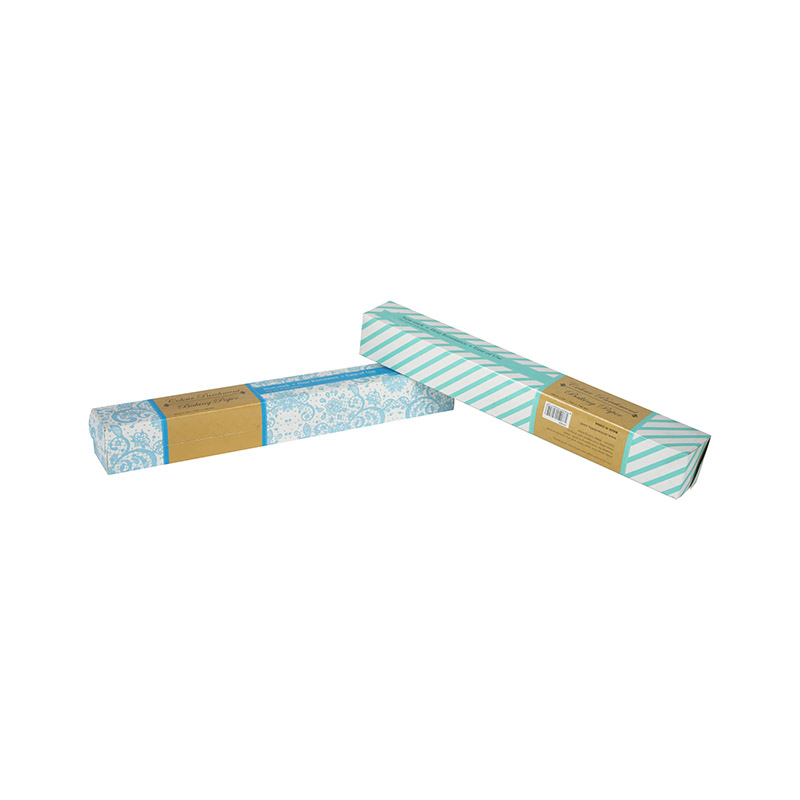
If you already have a roll of baking parchment paper at home, you can make your own air fryer basket liners rather than purchasing pre-cut ones. The process is straightforward but requires one important extra step: adding perforations so the liner does not block airflow.
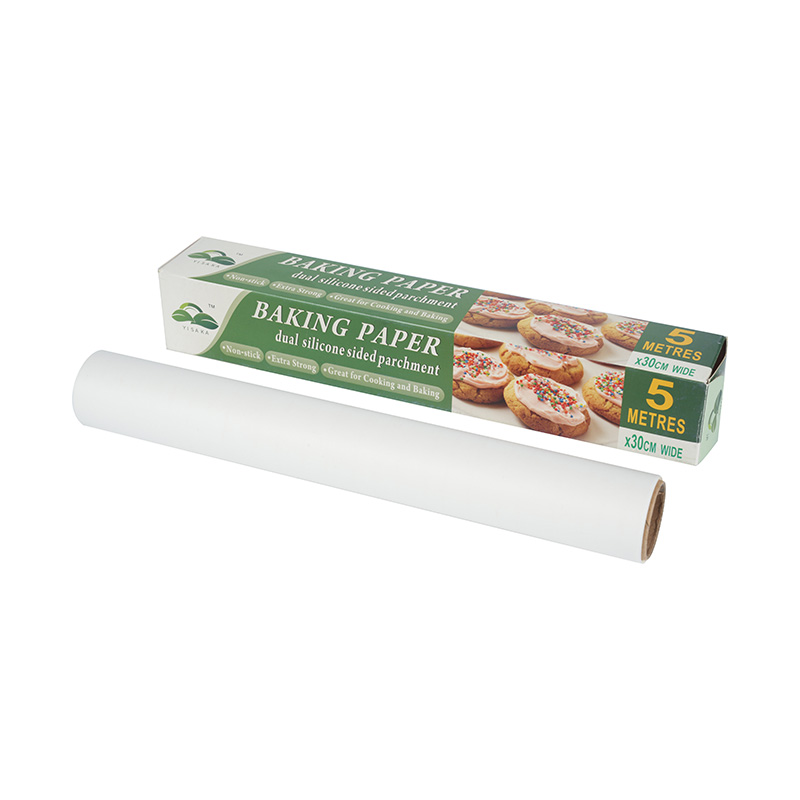
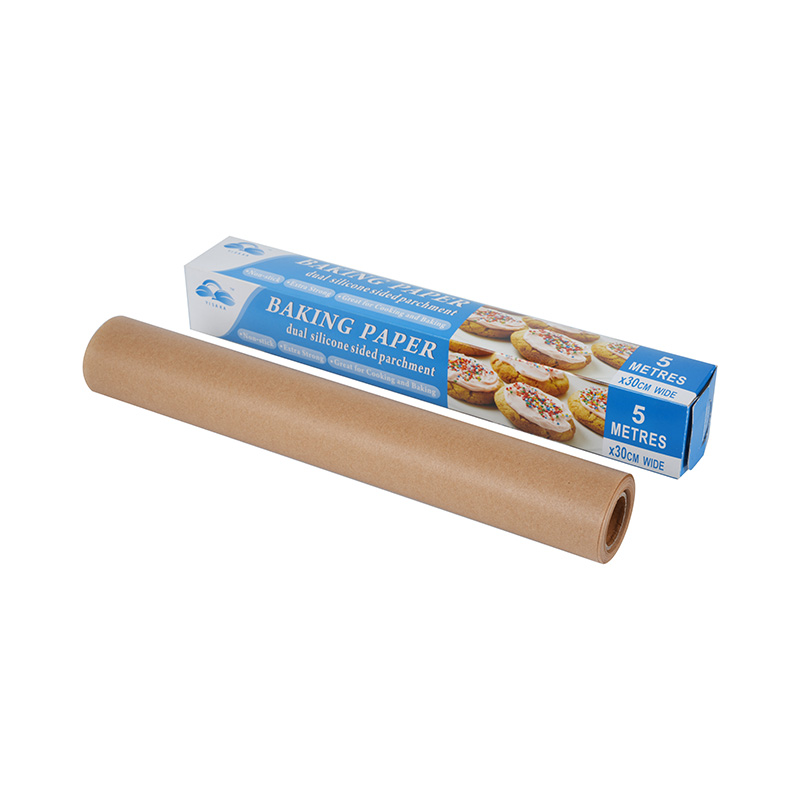
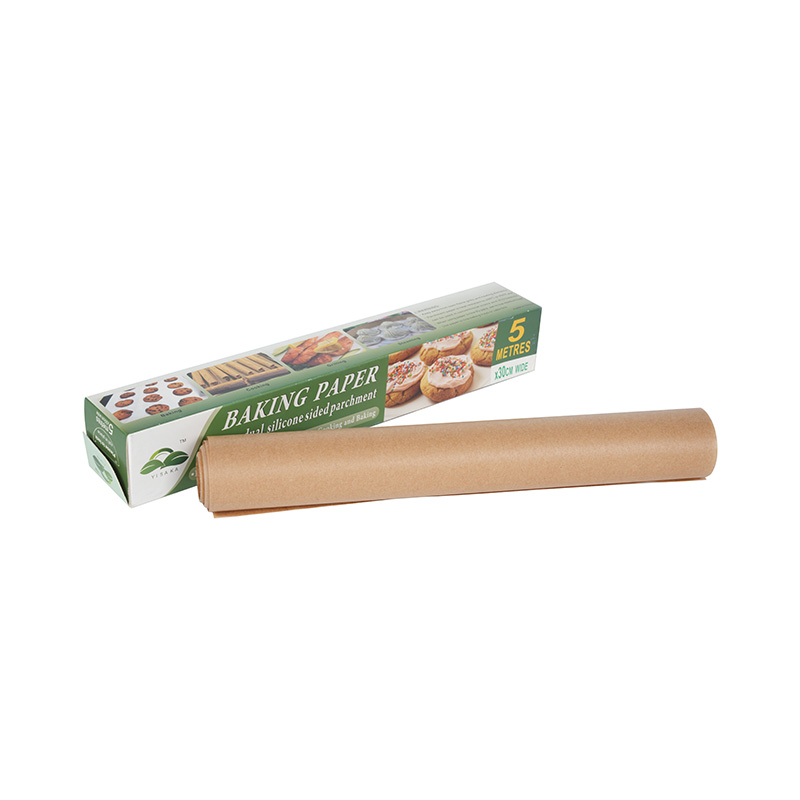
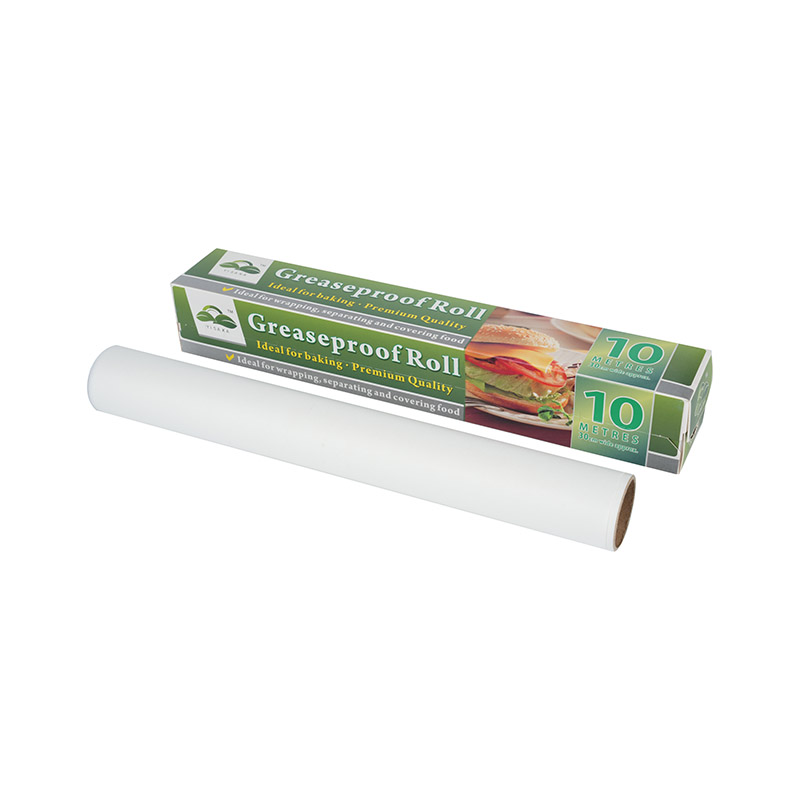
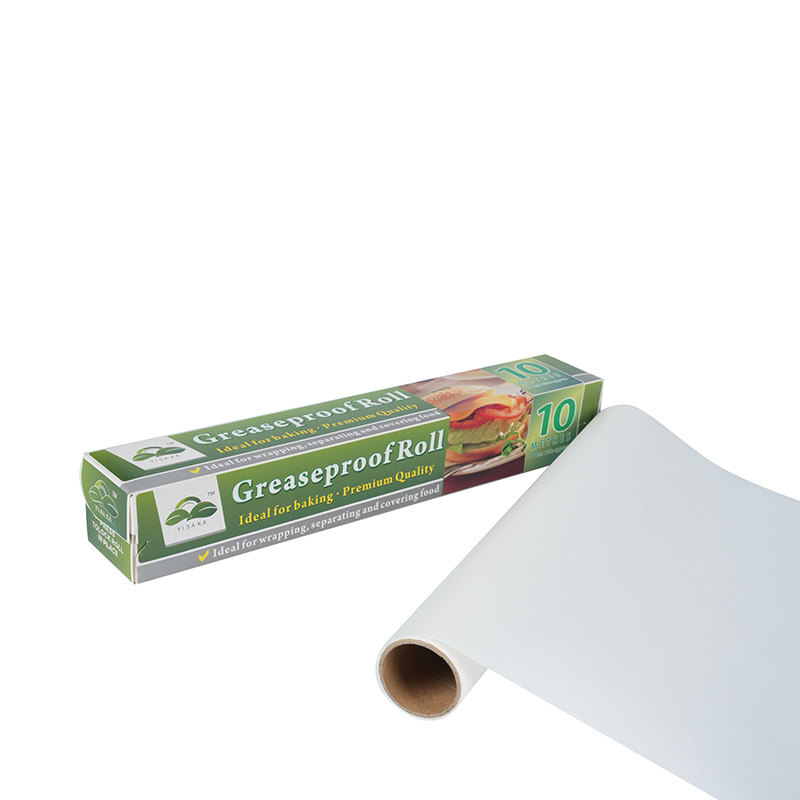
To make a DIY liner, place your air fryer basket upside down on the parchment paper and trace around the base with a pencil. Cut the traced shape out, then fold it into quarters and use a hole punch, skewer, or sharp knife to punch 10–15 small holes distributed evenly across the surface. Unfold, and your custom-cut liner is ready to use. This approach works perfectly well for occasional use and is a good solution when you need a liner immediately and do not have pre-cut ones on hand. For regular use, however, pre-punched liners save significant time and typically have a more even hole distribution than hand-punched versions, making them worth the modest cost for frequent air fryer cooks.