 English
 русский
Steaming is one of the gentlest ways to cook. Food sits above boiling water, cooks in moist heat, and keeps its shape, colour and nutrients far better than it would in a frying pan. The one thing that has always spoiled the experience is sticking: dumpling skins that tear, fish fillets that cling to the rack, and a steamer basket that takes longer to scrub than the meal took to cook. Paper for steaming exists to solve exactly that problem, and after more than ten years of producing it at our factory in Hangzhou, we can tell you that the right sheet makes a surprisingly large difference.
Content
- 1 What Is Paper for Steaming?
- 2 Why Use Paper for Steaming Instead of a Bare Rack?
- 3 The Main Types of Paper for Steaming
- 4 Perforated or Solid: Getting Steam Flow Right
- 5 White or Unbleached?
- 6 A Practical Checklist for Choosing Paper for Steaming
- 7 Paper for Steaming in Commercial Kitchens
- 8 Common Mistakes to Avoid
- 9 Sourcing Paper for Steaming from a Manufacturer You Can Trust
- 10 Frequently Asked Questions
What Is Paper for Steaming?
Paper for steaming is a food-grade sheet that sits between your food and the steamer surface, whether that surface is a bamboo basket, a stainless steel tier, a perforated tray or the rack of an air fryer. It is made from virgin wood pulp and then treated in one of two ways: coated with a thin, cured layer of food-grade silicone that gives it non-stick release, or processed to resist grease and moisture without any silicone at all.
You will see it sold under several names, and they mostly describe the same family of products. Steamer paper, steaming paper, dim sum paper, bamboo steamer liners and perforated round liners all belong here. The formats vary as well: pre-cut discs sized to standard basket diameters, flat square sheets, and rolls that you cut to fit. The common thread is that every sheet is designed to be in direct contact with food at steam temperature, which is why base paper selection and coating quality matter so much.
Why Use Paper for Steaming Instead of a Bare Rack?
If you have ever lifted a lid and watched a bun slide apart because it had welded itself to the bamboo, you already know the first reason. But the benefits go further than non-stick release:
- Nothing sticks, so dumplings, buns, fish and sticky rice come out whole and presentable.
- Hygiene improves, because food never touches a rack that may have been used for several batches.
- Cleanup drops to seconds; the liner is simply lifted out and discarded or rinsed.
- Perforated sheets let steam pass through evenly, so the bottom of the food cooks at the same rate as the top.
- Portioning becomes faster in commercial kitchens, since a liner can hold a single serving of food.
- Food-safe, certified materials protect both your customers and your brand reputation.
In short, a sheet of paper costs very little and removes three recurring headaches at once: sticking, cleaning and hygiene control.
The Main Types of Paper for Steaming
Buyers often ask us which type is "the best". There is no single answer, because the right choice depends on the food, the vessel and the volume you steam every day. The table below outlines the four options we produce and ship most often.
| Type | Appearance | Best Suited To | Steam Flow |
|---|---|---|---|
| White non-stick steam paper | Bright white, smooth, silicone coated | Dim sum, buns, dumplings, sticky rice | Good on small items |
| Unbleached grease-resistant paper | Natural kraft tone, unbleached pulp | Fish, meat, savoury dishes, rustic presentation | Good, needs perforation |
| Perforated round liner | Pre-cut circle with punched holes | Bamboo baskets, metal tiers, air fryer baskets | Excellent |
| Standard baking and parchment paper | Roll or flat sheet, cut to size | Home steaming and occasional use | Moderate unless pierced |
Perforated or Solid: Getting Steam Flow Right
A solid sheet protects the food, but it also blocks steam from rising directly underneath it. That is fine for a quick reheat, and it is not fine for raw dough that needs to cook through from the bottom. The traditional solution is perforation: small punched holes arranged in a regular pattern across the sheet.
Home cooks often make their own by folding a square of parchment several times and tearing small notches from the folded edges, then unfolding it into a lacy disc. It works, and we recommend it for anyone steaming once a week. For anyone steaming every day, the pre-punched version saves a great deal of time and gives a far more consistent result, which is why our perforated liners are cut, punched and stacked in one automated pass at the factory.
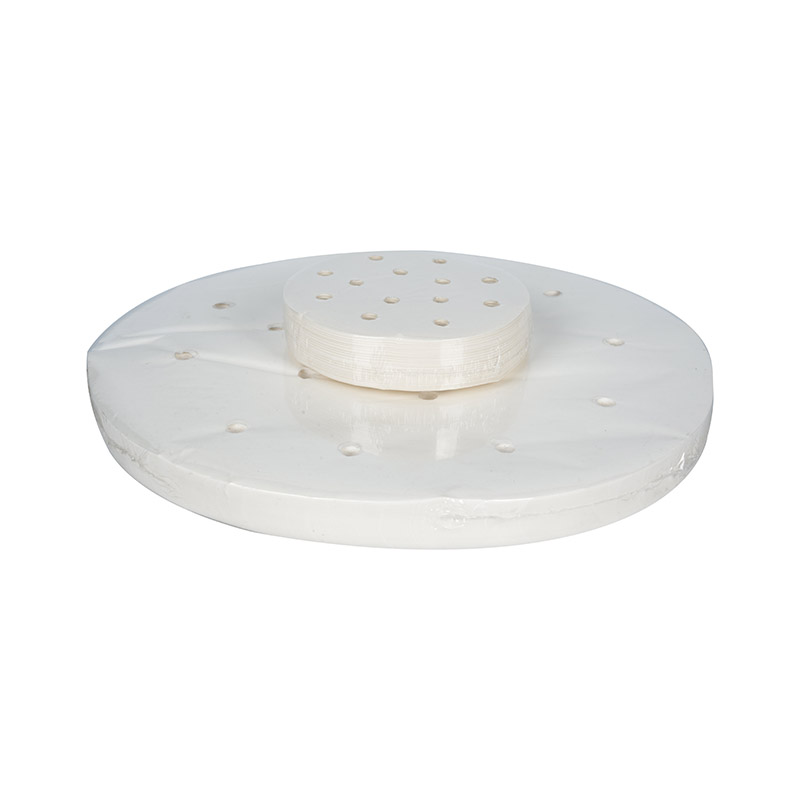 Air Fryer Liner Perforated Round Steaming PaperCoating Material WaxView Product →
These round liners are sized for common basket diameters, so a stack of them sits neatly inside the steamer and lifts out with the food still intact.
White or Unbleached?
Both options are food-grade and both perform well under steam. The difference is visual and psychological as much as technical. White non-stick paper gives a clean, bright backdrop that suits pale foods such as dumplings, buns and rice cakes. Unbleached paper keeps the natural tone of the pulp, avoids the bleaching step entirely, and many buyers prefer it for meat, fish and rustic presentation because the colour reads as more natural to diners.
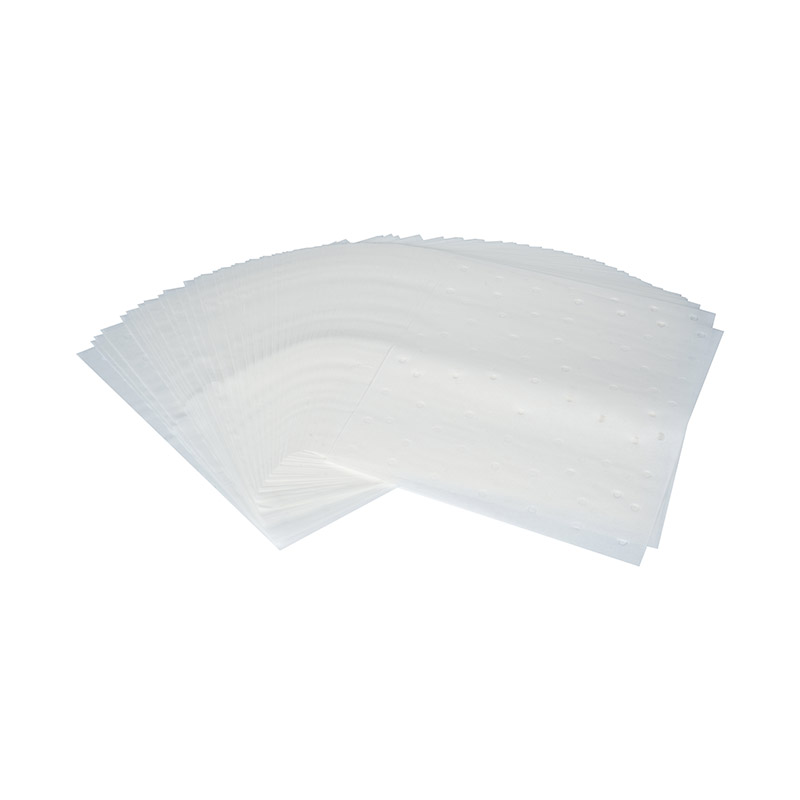 Unbleached Grease-Resistant Steam Paper For CookingCoating Material WaxView Product →
Our unbleached steam paper is grease-resistant without a silicone coating, which makes it a practical choice for dishes that release fat, such as steamed pork ribs or marinated chicken.
A Practical Checklist for Choosing Paper for Steaming
Before you place an order, work through these points. They are the same questions our product team asks every new customer, and they prevent most of the problems that show up later in production.
- Confirm food-contact compliance for your market: FDA and EU requirements, QS for China, and Kosher where relevant.
- Match the sheet to the food. Delicate dough needs a smoother release surface than dense meat.
- Check the basis weight. Thicker paper resists tearing and moisture better; thinner paper releases more quickly.
- Measure your vessel. A disc that is too large curls up the sides; one that is too small lets food slip past the edge.
- Decide on perforation, based on whether the food needs bottom-up steam or just protection.
- Consider branding. Printed logos and patterns turn a disposable liner into a small piece of presentation.
- Ask about the supply chain. FSC-certified pulp and stable lead times matter if you order regularly.
Paper for Steaming in Commercial Kitchens
In a dim sum house, a liner is not a kitchen accessory; it is part of the production line. Staff line hundreds of baskets before service, and every second saved per basket adds up. Beyond restaurants, frozen food factories place a liner under each portion so the product releases cleanly after reheating, catering companies use them to keep trays hygienic during transport, and cloud kitchens rely on them for both steaming and air frying.
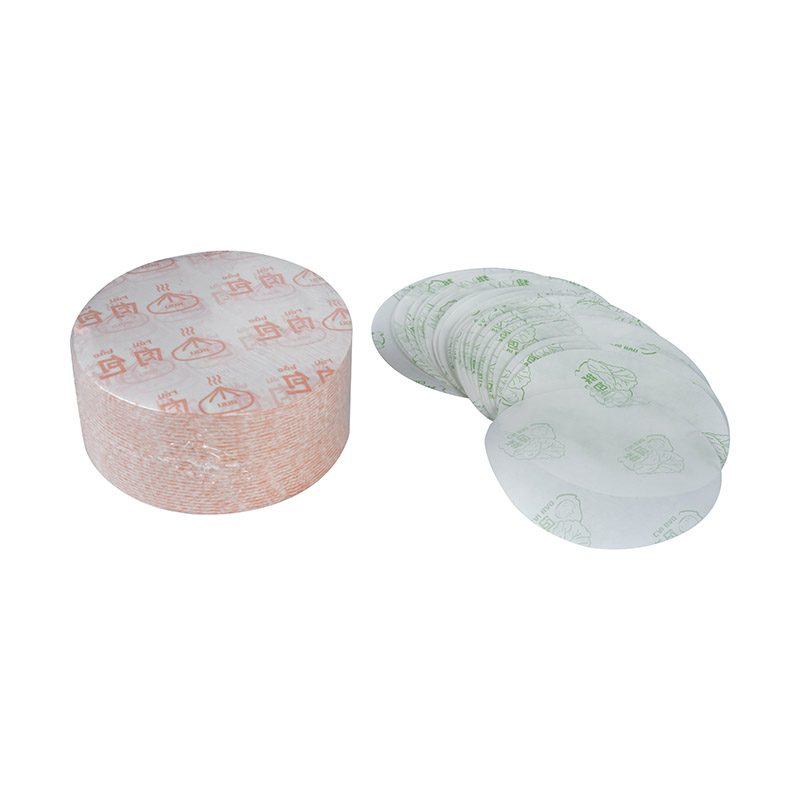 White Non-stick Steam Dim Sum PaperCoating Material WaxView Product →
For high-volume operations, the deciding factors are consistent sheet size, uniform coating and predictable release, batch after batch.
Common Mistakes to Avoid
- Using wax paper for steaming. Wax melts at steam temperature and has no place in a steamer basket.
- Reusing saturated liners. Once the paper is soaked and greasy, it will stick and may tear under the food.
- Ignoring basket diameter. Oversized sheets trap water and make the bottom of the food soggy.
- Steaming raw dough on a completely solid sheet, which slows cooking and causes dense, heavy results.
- Storing paper in a damp cupboard, where it can absorb moisture and lose its release properties.
Sourcing Paper for Steaming from a Manufacturer You Can Trust
YISAKA, the brand of Hangzhou Yisaka Paper Products Co., Ltd., has been producing food packaging paper since 2013. Our factory covers roughly 10,000 square metres, employs more than 80 people, and can produce up to 15,000 tonnes of paper per year across silicone-coated, greaseproof and waxed lines. We export to more than 30 countries, including markets in Europe, North America, Australia, the Middle East, Southeast Asia and South Africa.
For steaming paper specifically, we hold FDA, SGS, FSC, EU, Kosher and QS certifications, and our production runs under HACCP-based cleaning procedures and international GMP design standards. Our R&D team regularly develops custom diameters, basis weights, perforation patterns and printed designs from a customer's drawing or sample. If you would like to see how these sheets fit into a wider programme, you can review our full range of food-grade paper products and request samples for your own steamer setup.
Frequently Asked Questions
Is parchment paper safe for steaming?
Yes. Parchment and baking paper are silicone-coated and heat stable well above steam temperature, so they release food cleanly. If you want the full technical picture, our team has written a detailed answer on whether parchment paper is safe for steaming, including coating behaviour and temperature limits.
Can I put steaming paper in an air fryer?
Yes, provided the sheet is weighted down by food and does not touch the heating element. Perforated round liners are the safest format because they let hot air circulate and stay flat in the basket.
How many times can a liner be reused?
For home use, a sturdy unbleached or heavy-duty sheet can often be rinsed and reused two or three times if it is not greasy. In commercial settings, single use is the norm, because hygiene and consistency matter more than the cost of a sheet.
Does the paper change the taste of the food?
No. Food-grade silicone and unbleached pulp are inert at steam temperature, and no odour or flavour transfers to the food when the paper is stored correctly and used within its shelf life.
Paper for steaming is a small item with an outsized effect on how a kitchen runs. Choose the right base paper, the right coating and the right format, and steaming becomes what it should be: simple, clean and reliably delicious. Whether you are lining a single bamboo basket at home or specifying liners for a production line, the same principles apply, and we are always happy to talk through the details with you.